
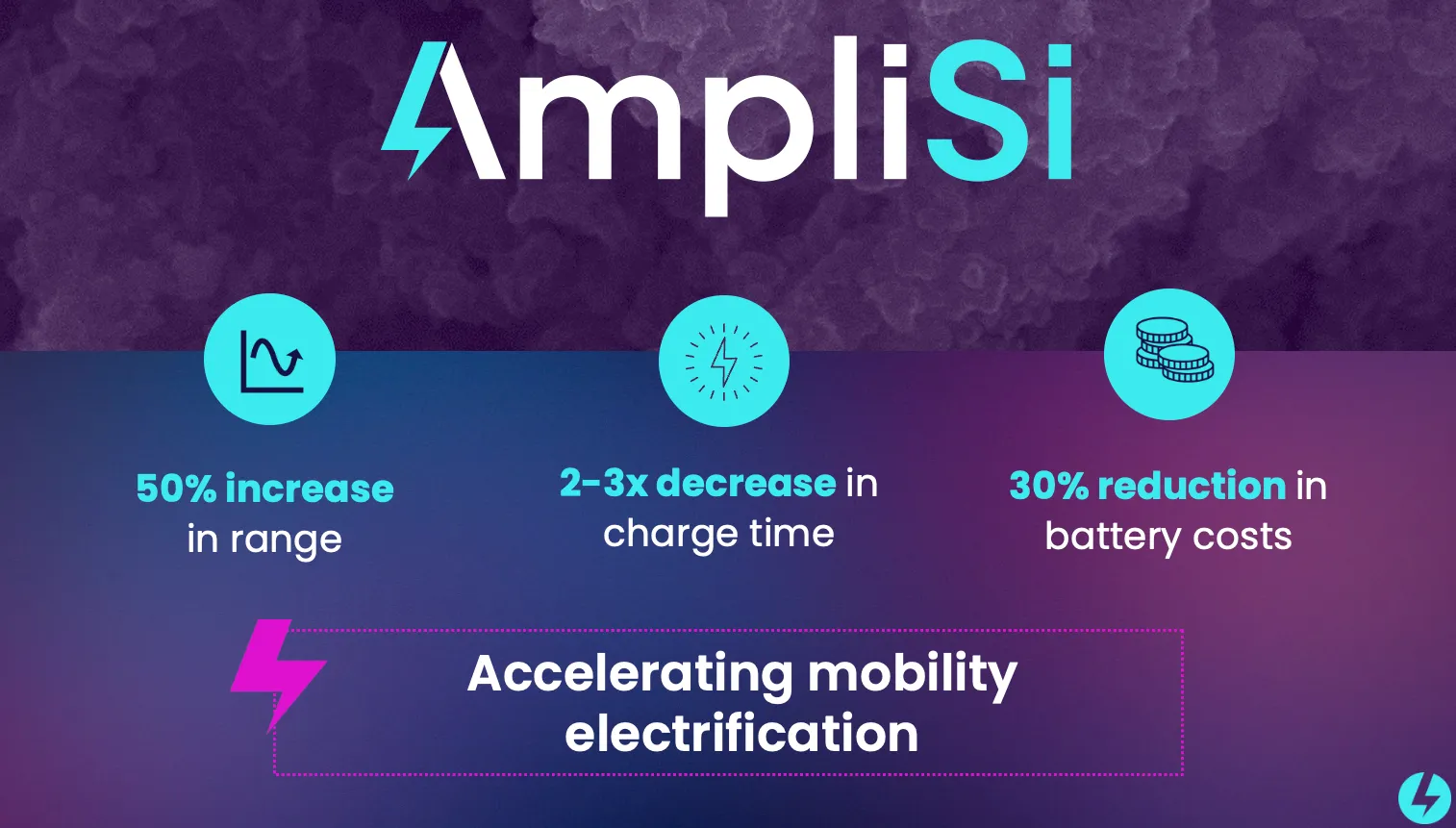
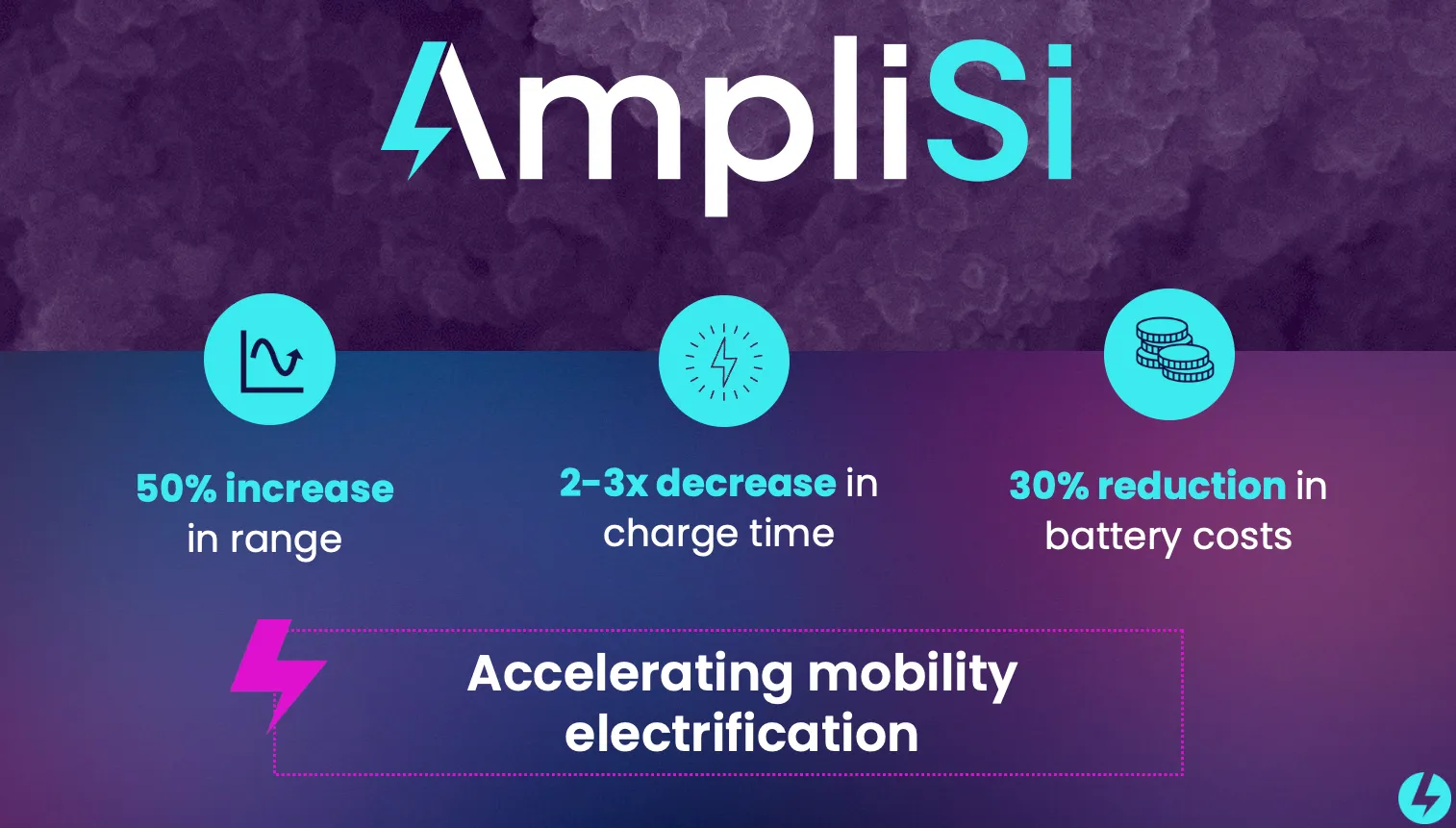

Amplisi
The widespread adoption of electric Vehicles (EVs) is accelerating, yet current battery technology remains a bottleneck.
- Cohort
- NG Autumn 25
- Sector
- Energy & Power · Materials & Chemicals · Mobility & Transport
What they do
Traditional graphite anodes, which dominate the market, offer limited energy density and restrict the range of EVs.
Product & technology
AmpliSi uses a patented low temperature magnesiothermic reduction reaction to produce porous silicon, a high energy density and fast charging anode active material. The reduction process is inherently scalable with non-specialised equipment, without using pyrophoric silane gas or toxic hydrofluoric acid. The silicon product is inherently porous, the nanostructure of which naturally reduces strain during battery cycling, by allowing swelling movement into the internal void volume The reduction reaction is cost efficient process compared to other silicon synthesis strategies, without compromising on performance.
Why we invested
- →Massive EV pull: silicon anodes are a clear route to higher range and faster charging.
- →Distinctive process: patented low temperature route makes porous silicon without silane or HF - safer and higher performing.
- →Built to scale: uses standard kit, inherently scalable and cost advantaged vs other silicon routes.
- →Early OEM traction: already shipping material for trials with major auto and cell players.